‘JUSTICE OR EXTINCTION’: ADC’s Final Plea to Nigeria’s Chief Justice as Clock Ticks Toward 2027 Election Doom
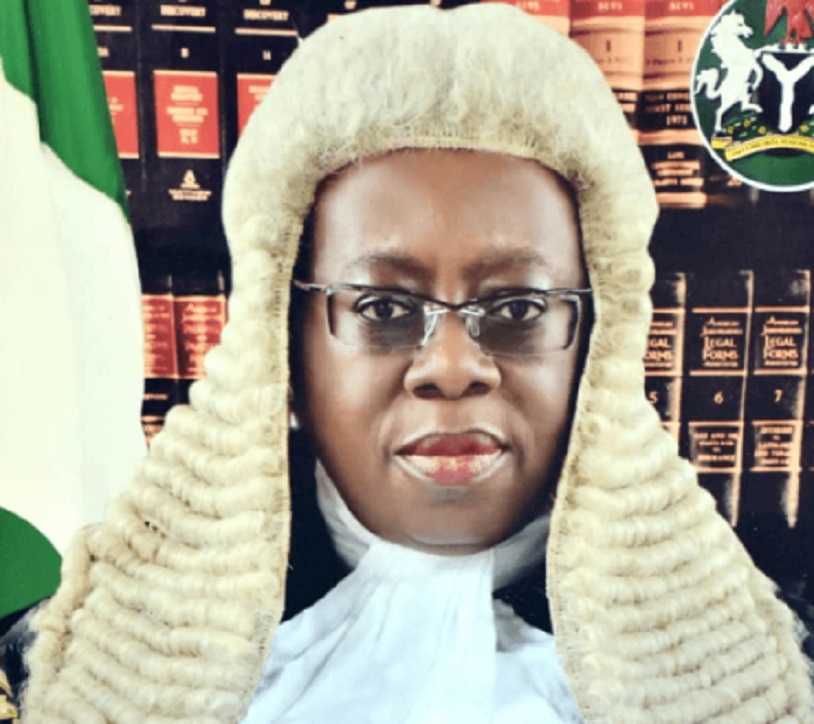
ABUJA, FCT – In a desperate, high-stakes legal gambit that will shape Nigeria’s democratic landscape, the African Democratic Congress (ADC) has rushed an urgent letter to the Honourable Chief Justice of Nigeria, Justice Kudirat Kekere-Ekun pleading for the delivery of a reserved judgment within three days, before the party is wiped from the 2027 election map entirely.
The letter, dated April 28, 2026, was filed by S. E. Aruwa, SAN & Co., counsel to the ADC, and addressed directly to the apex of Nigeria’s judiciary. Its title alone reads like a nation’s final warning: “A Passionate Plea for the Timely Delivery of Judgment to Forestall the Impending Irreparable Harm to Constitutional Right of ADC to Participate in the 2027 General Elections.”
At the heart of the storm is Suit No: SC/CV/180/2026—a bitter political feud between Senator David Mark and Hon. Nafiu Bala Gombe & 4 others. The Supreme Court heard the appeal with unusual speed on April 22, 2026. Judgment was reserved. And since that day, silence.
But for the ADC, every hour of that silence is a death sentence.
leadership Vacuum, Constitutional Crisis
According to the letter obtained by our newsroom, the Independent National Electoral Commission (INEC), acting on a lower court’s judgment in Appeal No: CA/ABJ/145/2026, has already moved to de-recognize the ADC’s national leadership.
The party remains, on paper, a registered political party. But without recognized leaders, the ADC is a ghost ship. No valid primaries. No nomination of candidates. No ability to comply with INEC’s Revised Timetable for the 2027 elections, for which activities have already commenced.
“My Lord, the ADC’s ability to comply with these statutory requirements is wholly dependent on the timely delivery of the judgment in the instant Appeal,” writes Shaibu Enejoh Aruwa, SAN, his words measured but trembling with urgency.
“Without the delivery of judgment within the next three days from the date of this letter, the ADC stands the grave and irreversible risk of being excluded from participating in the 2027 General Elections.”
Millions at Risk of Disenfranchisement
The letter does not speak only of legal technicalities. It invokes the blood and breath of democracy.
“This would disenfranchise millions of Nigerians who have subscribed to the ideals of the ADC and deny them their constitutional right to freely associate and contest elections through a political party of their choice.”
Those millions, the ADC argues, are not statistics. They are voters, real citizens, whose political voice will be crushed not by the ballot box, but by the slow grind of a judgment delivered too late.
Aruwa, SAN, is careful not to criticize the Supreme Court’s workload, acknowledging “the enormous responsibilities of this Honourable Court.” But then comes the dagger: “Justice delayed, in this peculiar circumstance, would amount to justice denied.”
The Irony of Expeditious Hearing
There is a cruel irony buried in the ADC’s plea. The Supreme Court heard the appeal expeditiously on April 22, a sign of judicial efficiency. But efficiency without a timely judgment is like a surgeon who opens the patient and then walks away.
The party is now trapped between two courts: a lower court’s ruling that has effectively beheaded its leadership, and an apex court’s silence that risks making that beheading permanent.
INEC, for its part, has done nothing illegal. The Commission is bound to follow extant court orders. But the attached INEC press release and the Revised 2027 Election Timetable, both submitted with the letter, paint a chilling picture: a regulatory clock that does not wait for justice to catch up.
A Chief Justice’s Defining Moment
The letter lands on the desk of the Honourable Chief Justice of Nigeria at a moment of profound national consequence. The choices are stark:
· Deliver judgment within three days, and the ADC may yet live to contest 2027.
· Delay beyond that window, and even a favorable ruling could arrive as an epitaph, too late to revive a party already excluded by INEC’s immutable schedule.
Political parties have died before in Nigeria. But rarely by judicial timeout. Rarely with millions of citizens watching their constitutional rights evaporate not by military decree, but by the silence of a courtroom.
The Final Plea
“We thank Your Lordships as we look forward to Your Lordships’ kind intervention,” the letter concludes. The language is courteous. The subtext is screaming.
Because in three days, if no judgment comes, the ADC will not need a court to tell it it’s dead. INEC’s timetable will have already written the obituary.
And the Supreme Court, the very institution meant to be democracy’s last guardian, will have unknowingly held the pen.














Post Comment