NBA SLAMS EFCC OVER ILLEGAL ACCOUNT FREEZE: “You Can’t Ground a State Government Without Court Order”
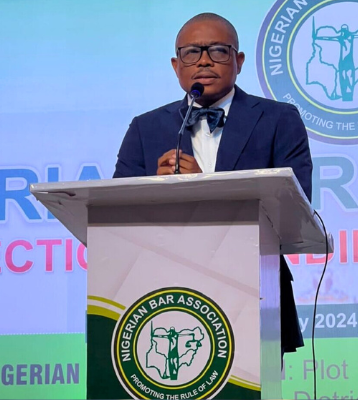
Bar Association warns bank against complying with unconstitutional directive, says anti-graft agency has crossed constitutional red line
The Nigerian Bar Association has delivered a blistering rebuke to the Economic and Financial Crimes Commission,EFCC, declaring the agency’s unilateral freezing of Osun State’s government accounts as “unconstitutional” and a “dangerous abuse of power” that threatens to paralyze an entire state’s governance.
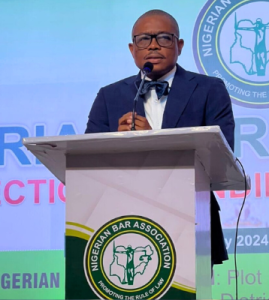
In a stinging condemnation that exposes the fault lines between federal enforcement and state sovereignty, NBA President Afam Osigwe tore into the EFCC’s August 5 directive to First Bank Plc to place a post-no-debit restriction on the Osun State Government’s statutory allocation account, a move tied to an ongoing investigation into alleged N11 billion ecological fund fraud.
“No government agency or any person has the right or the power to restrict withdrawals from the account of any state,” Osigwe declared in an interview with The Punch. “Such an order would be unconstitutional and also violate the powers of the EFCC and may actually amount to an abuse of power.”
The NBA president’s words carry the weight of Nigeria’s most powerful legal body, directly challenging the EFCC’s authority to act without judicial oversight. His message to First Bank was equally unequivocal: refuse to comply with what he termed an illegal directive absent a valid court order.
The EFCC’s defense, that its investigation, which began in March, revealed “significant transfers” from the state’s account into corporate entities beginning August 2, failed to move the NBA.
“If the EFCC knows that any particular account is being used for the purpose of fraud, it may be able to obtain a court order, but it cannot make a blanket order freezing the accounts of any state,” Osigwe insisted, drawing a clear constitutional line that the anti-graft agency appears to have crossed.
The timing of the restriction, placing a chokehold on the financial lifeline of an entire state, has ignited fury from Governor Ademola Adeleke, who characterized the action as part of a “sponsored attack” against his administration. The governor pointed to what he described as a coordinated campaign including harassment of Accord Party members and efforts to undermine local government operations.
The NBA’s intervention raises fundamental questions about the limits of federal investigative powers in Nigeria’s constitutional democracy. Can the EFCC effectively shut down a state government’s operations through administrative fiat? The NBA’s answer is a resounding no.
The stakes could not be higher. A state government’s statutory allocation account is not discretionary funds, it is the oxygen that powers public services, salaries, and critical infrastructure. Freezing it without judicial authorization, the NBA argues, is not just an overreach; it is a constitutional violation that could set a dangerous precedent for federal agencies targeting subnational governments.
The EFCC’s letter, signed by Assistant Commander Adenike Babalola on behalf of the Director of Investigation, represents what the NBA sees as a troubling expansion of the commission’s powers beyond the bounds of its establishing statute.
“We should not have such a situation,” Osigwe warned. “If there is a need to freeze the account of a person or government, there is a need to provide a proper basis for it and get a proper order.”
The battle lines are now drawn. The NBA has thrown its full institutional weight behind the principle that no agency—however powerful—can circumvent the courts in matters that strike at the heart of Nigeria’s federal structure. The question now is whether the EFCC will backtrack or force a constitutional showdown that could redefine the boundaries of anti-corruption enforcement in Nigeria.
For First Bank, caught between a federal agency’s directive and the NBA’s legal warning, the path forward carries significant legal risk. Complying with an unconstitutional order could expose the bank to liability, while refusing the EFCC could invite regulatory retaliation.
The Osun State account freeze is no longer just an investigation, it has become a constitutional crisis in the making, with the NBA standing firm against what it sees as executive overreach dressed in anti-corruption clothing.
In a democracy, the NBA reminds us, even the most righteous investigations must bow to constitutional safeguards. The EFCC, it appears, has forgotten that lesson.





Post Comment