After 47 Years of Failure, FG Blames ‘Steel Import Cabal’ as China Deal Raises Fresh Hope for Ajaokuta
By Our Correspondent
The Federal Government has blamed a powerful cabal benefiting from Nigeria’s multibillion-dollar steel import business, chronic underfunding and decades of weak political commitment for the failure to revive the Ajaokuta Steel Company after 47 years.
Minister of Steel Development, Mr. Shuaibu Abubakar Audu, said Nigeria would require about ₦3 trillion to fully revive the long-abandoned steel complex, a funding challenge the government is now seeking to overcome through negotiations with Chinese investors.
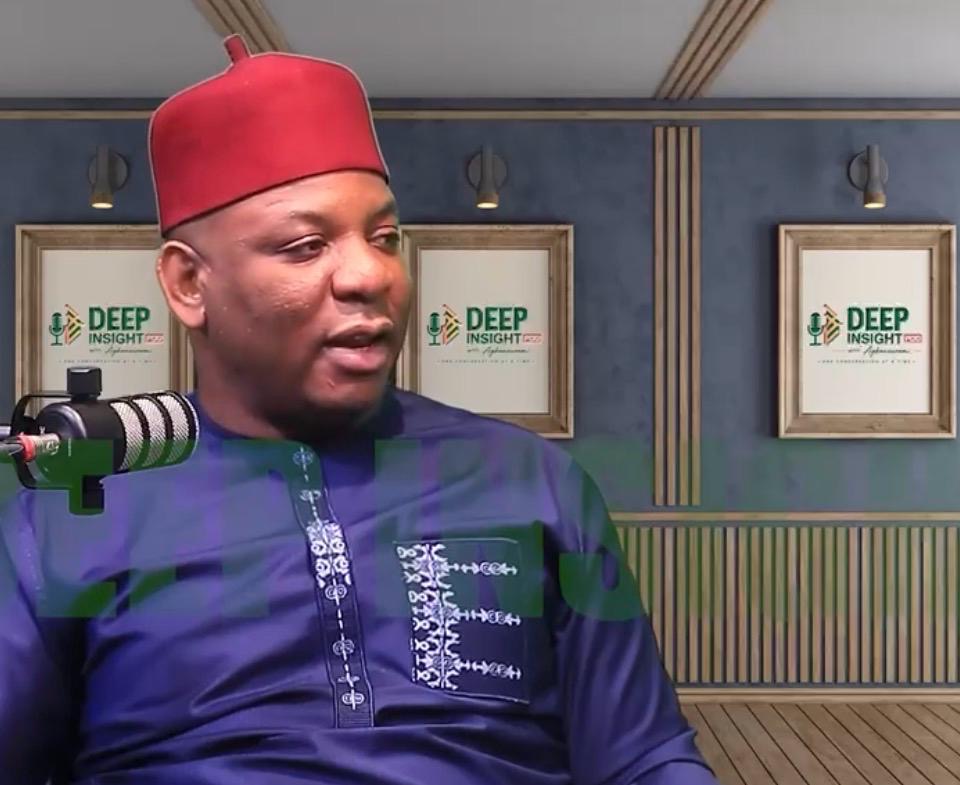
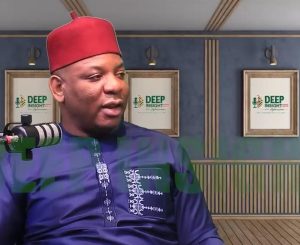
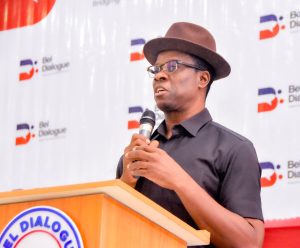
Audu made the revelations during an interview on Deep Insight With Agbonsuremi, a podcast anchored by veteran journalist and broadcaster, Augustine Okhiria Agbonsuremi.
For nearly five decades, the Ajaokuta Steel Complex in Kogi State has remained one of Nigeria’s most painful symbols of abandoned industrial ambition.
Conceived in the 1970s as the foundation of Nigeria’s industrialisation and steel self-sufficiency programme, billions have been spent on the project without the complex achieving commercial steel production.
The minister said the project had suffered not only from inconsistent funding and neglect by successive administrations but also from powerful vested interests benefiting from Nigeria’s dependence on imported iron and steel.
According to him, those profiting from the estimated $4 billion Nigeria spends annually on steel imports have strong reasons to resist the development of a competitive local steel industry.
“The people that are benefiting from imports of $4bn in terms of iron and steel annually would fight tooth and nail to prevent the local industry from kick-starting,” Audu said.
He disclosed that such interests had made persistent efforts to frustrate government initiatives aimed at reviving the steel sector, including attempts to obstruct legislative reforms considered necessary for the industry.
Audu said the Federal Government was now hopeful of concluding negotiations with a Chinese investor that could commit between $1.5 billion and $2 billion to revive the Ajaokuta Steel Complex.
According to him, the proposed investment would involve a combination of cash and equipment, while the government is considering a production-sharing arrangement that would enable the investor to recover its investment before ownership eventually reverts fully to the Federal Government.
The minister expressed optimism that Ajaokuta could commence commercial production by 2028 if negotiations with the Chinese investor are successfully concluded this year.
He explained that the government had deliberately avoided injecting the required ₦3 trillion directly into the project because of the enormous financial burden involved.
Audu noted that the 2025 budgetary allocation for Ajaokuta was only ₦500 million, with just ₦50 million earmarked for capital expenditure—an amount far below what is required to restore the complex to full operation.
The steel minister said an ongoing technical and financial audit would determine the exact condition of the facility, although preliminary assessments suggest that about 70 per cent of its infrastructure remains useful while approximately 30 per cent requires significant upgrading.
Ajaokuta, which was reportedly about 98 per cent completed in the early 1980s, subsequently became trapped in decades of abandoned contracts, legal disputes, maintenance failures and allegations of asset stripping.
Audu said the Federal Government initially explored the possibility of working with Russian equipment manufacturers but shifted its focus towards China following the Russia-Ukraine war.
To make the project more attractive to investors, he disclosed that the government had signed a 20-year gas supply agreement with the Nigerian National Petroleum Company Limited.
He also revealed that the Federal Government had entered into an agreement with the Ministry of Defence and the Defence Industries Corporation of Nigeria to utilise part of the Ajaokuta complex for the production of military hardware, including helmets, bulletproof vests and ammunition.
Beyond Ajaokuta, Audu said the Federal Government was pursuing a broader strategy to revive Nigeria’s steel industry, including the restoration of Delta Steel and the implementation of a 10-year development blueprint for the sector.
He said a fully functional Ajaokuta and other major steel facilities could transform Nigeria’s economy, potentially contributing about $100 billion while creating between 500,000 and one million jobs.
The minister added that Nigeria’s estimated three billion metric tonnes of iron ore deposits in Kogi State provide a strong foundation for building a competitive domestic steel industry.
Audu, however, linked the long-term success of the government’s economic agenda to political continuity, arguing that President Bola Tinubu would need a second term to consolidate ongoing reforms and complete major projects.
“We are hoping, praying, that the President gets a second term so that we can have a 2030 $1tn economy,” he said.
He urged Nigerians to support Tinubu’s re-election, insisting that continuity would be critical to achieving the administration’s ambitious economic objectives and finally delivering the long-awaited revival of Ajaokuta.
The minister said Nigerians should expect three major outcomes from the Ministry of Steel Development: the signing of an agreement to revive Ajaokuta, the revival of Delta Steel and the implementation of a comprehensive 10-year blueprint for Nigeria’s steel industry.
Expressing confidence in his ability to deliver, Audu declared:
“Absolutely, I believe I can do it. And I believe that I will do it.”
For a project that has spent 47 years as Nigeria’s unfulfilled industrial dream, the proposed Chinese investment could represent another major turning point—or yet another promise in the long and troubled history of Ajaokuta Steel. The coming months may determine which of the two it becomes.


Post Comment