EDITORIAL : Tinubu’s Nigeria: A Democracy Under Siege, A Nation Reduced
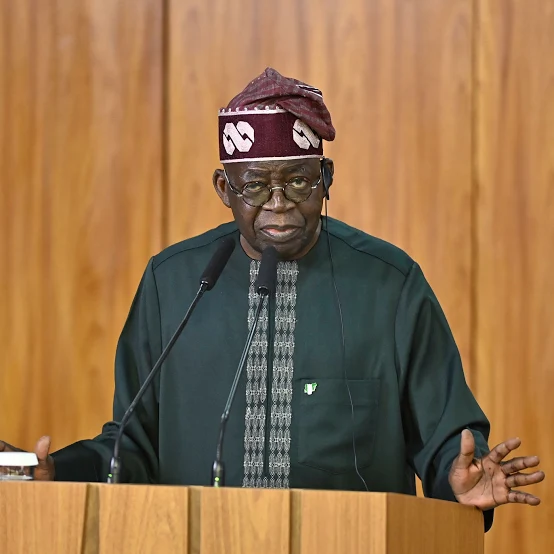
There is a growing, undeniable sentiment across Nigeria that the administration of President Bola Ahmed Tinubu has become less a government of the people and more an enterprise of power—centralized, self-serving, and increasingly indifferent to the lived realities of ordinary citizens. What was promised as renewed hope now feels, to many, like a tightening grip on the nation’s democratic soul.
At the heart of this disillusionment is a simple but troubling perception: that the value of the Nigerian citizen has been systematically diminished. From economic hardship to political repression, Nigerians are being pushed to the margins while power consolidates at the center.
A Democracy Bent to Political Will
One of the most striking features of this administration is its aggressive reshaping of Nigeria’s political landscape. The strategic alignment with Nyesom Wike, an opposition stalwart turned Federal Capital Territory Minister, has come to symbolize a broader pattern: co-opt, destabilize, and dominate.
Wike’s role in the internal disintegration of the Peoples Democratic Party (PDP) is widely seen as more than coincidence. It reflects a calculated effort to fracture the opposition from within. The resulting chaos has left Nigeria with weakened political alternatives, undermining the very essence of multiparty democracy.
The crisis in Rivers State further underscores this pattern. The earlier suspension of democratic structures, governor, legislature, and the imposition of a sole administrator, raises serious constitutional and ethical questions. That such actions could proceed with the backing of the Senate, led by, only deepens concerns about institutional independence. What should be a system of checks and balances is increasingly perceived as an echo chamber of executive will.
Instruments of Power or Tools of Control?
The executive, legislature, security agencies, and even the judiciary are meant to serve as pillars of democracy. Yet, under Tinubu’s leadership, critics argue these institutions are being repurposed into instruments of political enforcement.
Allegations of judicial compromise—once whispered—are now spoken more openly. The courts, ideally temples of justice, risk being seen as arenas of convenience, where outcomes align suspiciously with political interests. Whether perception or reality, this erosion of trust is dangerous. A democracy cannot survive when its arbiters are doubted.
Economic Policies, Human Consequences
If the political climate is tense, the economic reality is even harsher. Inflation, currency instability, and rising living costs have left millions struggling. For many Nigerians, survival has replaced aspiration.
Critics argue that the administration’s economic reforms, while perhaps bold on paper, have translated into widespread hardship without adequate safety nets. The removal of subsidies, for instance, may have been fiscally logical, but its execution has been socially devastating.
Compounding this is the perception of elite enrichment. Allegations—such as those involving business proxies and major infrastructure contracts—feed into a narrative of governance that prioritizes personal and familial interests over national welfare. Whether proven or not, such claims resonate because they align with the lived experiences of inequality and exclusion.
The Shadow of Political Dominance
There is also the question of political freedom. Reports of opposition figures being pressured to defect to the ruling All Progressives Congress (APC) suggest a climate where dissent is not just discouraged but actively dismantled.
The situation within the African Democratic Congress (ADC), including alleged interference by the electoral body, Independent National Electoral Commission (INEC), adds another layer of concern. If electoral institutions are perceived as compromised, then the foundation of democratic legitimacy itself is at risk.
A Pattern, Not an Anomaly
Even voices once critical of Tinubu, like Daniel Bwala, have previously described a governance style rooted in control rather than consensus. His past remarks about a “monarchical democracy” in Lagos—where political outcomes depended on the approval of one man—now echo ominously on a national scale.
Historical accounts from Tinubu’s tenure as governor of Lagos State, including tensions with the legislature and controversial political maneuvers, are being revisited not as isolated incidents but as a blueprint for current governance.
The Bigger Question
Is this the Nigeria Nigerians voted for?
A government that appears more focused on consolidating power than solving insecurity. A leadership that seems insulated from the pain of its people. A democracy where opposition is weakened, institutions are questioned, and citizens feel increasingly powerless.
The issue is not just policy—it is philosophy. Governance must be anchored in empathy, accountability, and respect for democratic norms. Without these, power becomes an end in itself, not a means to serve.
Conclusion: A Nation at a Crossroads
Nigeria stands at a critical juncture. The actions and direction of the Tinubu administration will not only define its legacy but shape the future of the nation’s democracy.
If the current trajectory continues—marked by political dominance, economic strain, and institutional erosion—then the verdict from the people may be swift and unforgiving.
Because no matter how powerful a government becomes, it cannot outlast the will of a people pushed too far.
And right now, for many Nigerians, this administration feels less like leadership—and more like a burden they are being forced to endure.




Post Comment